Author: admin
Utilization management hurdles
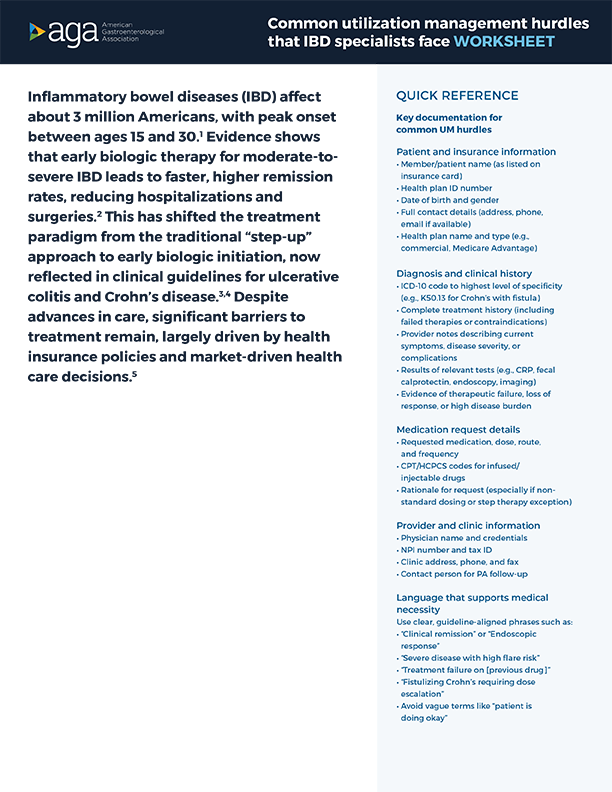
Inflammatory bowel diseases (IBD) affect about 3 million Americans, with peak onset between ages 15 and 30.1 Evidence shows that early biologic therapy for moderate-to-severe IBD leads to faster, higher remission rates, reducing hospitalizations and surgeries.2 This has shifted the treatment paradigm from the traditional “step-up” approach to early biologic initiation, now reflected in clinical guidelines for ulcerative colitis and Crohn’s disease.3,4 Despite advances in care, significant barriers to treatment remain, largely driven by health insurance policies and market-driven health care decisions.
Repeated, frequent prior authorization requests
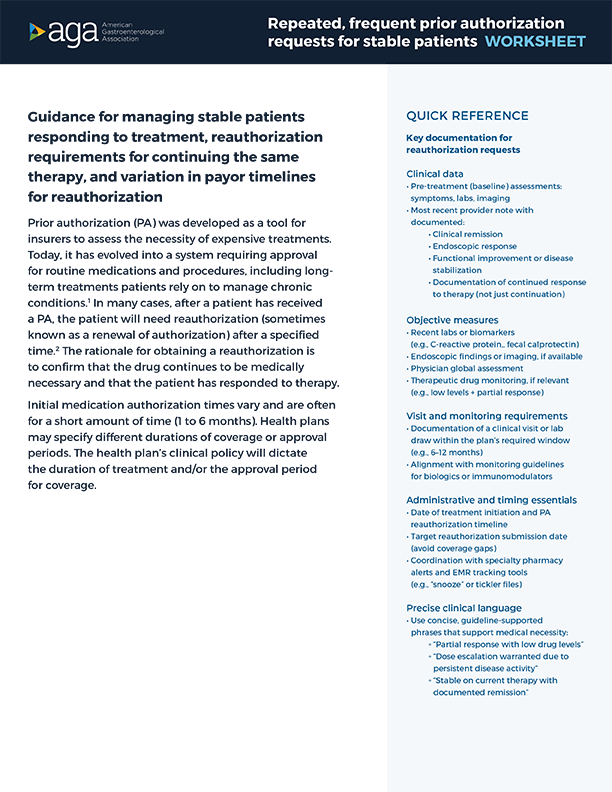
Guidance for managing stable patients responding to treatment, reauthorization requirements for continuing the same therapy, and variation in payor timelines
for reauthorization.
Non-medical switching
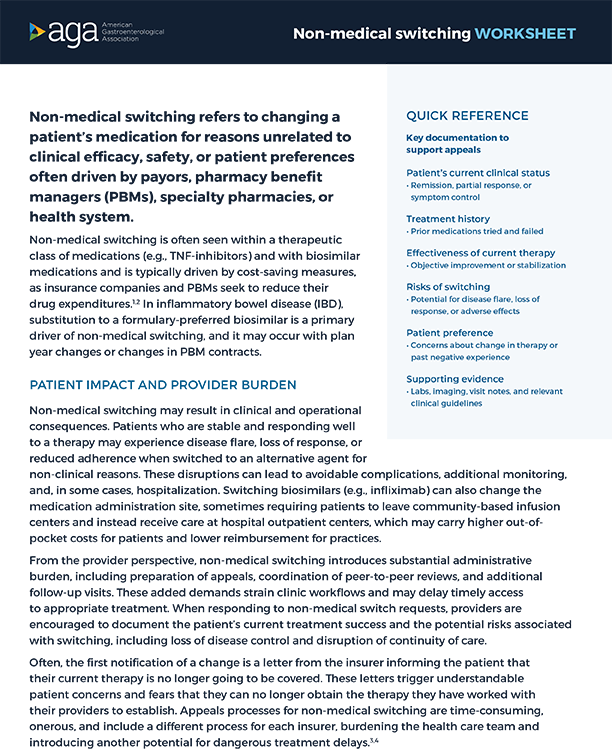
Non-medical switching refers to changing a patient’s medication for reasons unrelated to clinical efficacy, safety, or patient preferences often driven by payors, pharmacy benefit managers (PBMs), specialty pharmacies, or health system.
Dose and/or frequency limitations
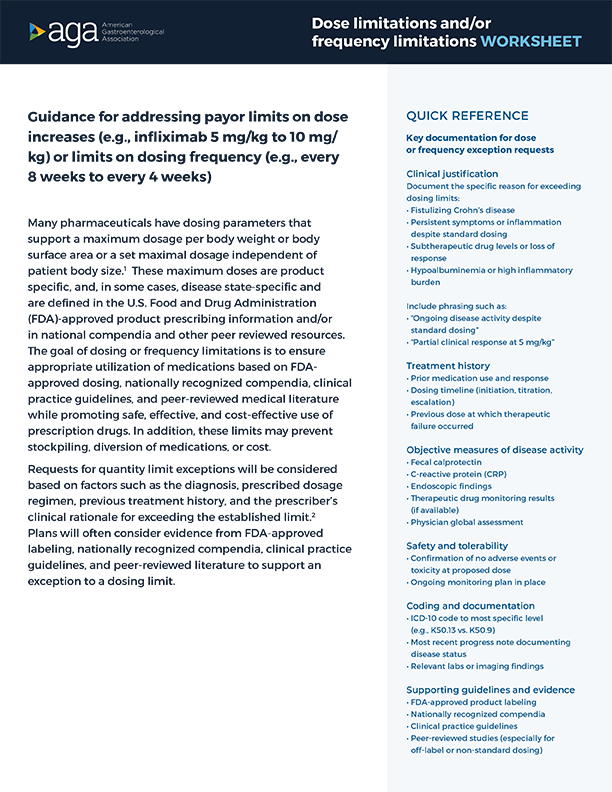
Guidance for managing stable patients responding to treatment, reauthorization requirements for continuing the same therapy, and variation in payer timelines for reauthorization.

Economic burden of IBD
Topics covered within this infographic include how payors are likely aware that the incidence and cost of IBD are increasing but most of the spend for IBD is in the inpatient and emergency department.
Understanding payor drug use management initiatives
In this downloadable infographic you’ll learn how several different tactics may be used as part of a drug use management strategy, the overall goal of which is to ensure appropriate medication use.
Managing change in health care insurance
Learn about challenges and solutions related to transitions in health care coverage, non-medical switching, site of care concerns, and emerging treatments.

AGA advocacy action center

Testimonial
“I have seen the influence of specialty society guidelines on payors’ decisions. Other than randomized clinical trials, specialty societies are the first place payors go to get more information.”

Testimonial
“Patients do tend to have more success with appeals when verbalizing the direct effects we are experiencing due to a delay in authorization. I believe having patients be able to do some of the follow-up allows for the opportunity for the patient to not only be proactive, but also not have to be sitting around waiting for an authorization to go through.”
- 1
- 1-10 of 10 results